Methodology
How we test every code and answer
Anyone can copy-paste a code list. What we do instead is check ours against the game's own page every day, cross-check it against sources that date their own checks, and show you the date and the sources on every page — so you don't have to take our word for it.
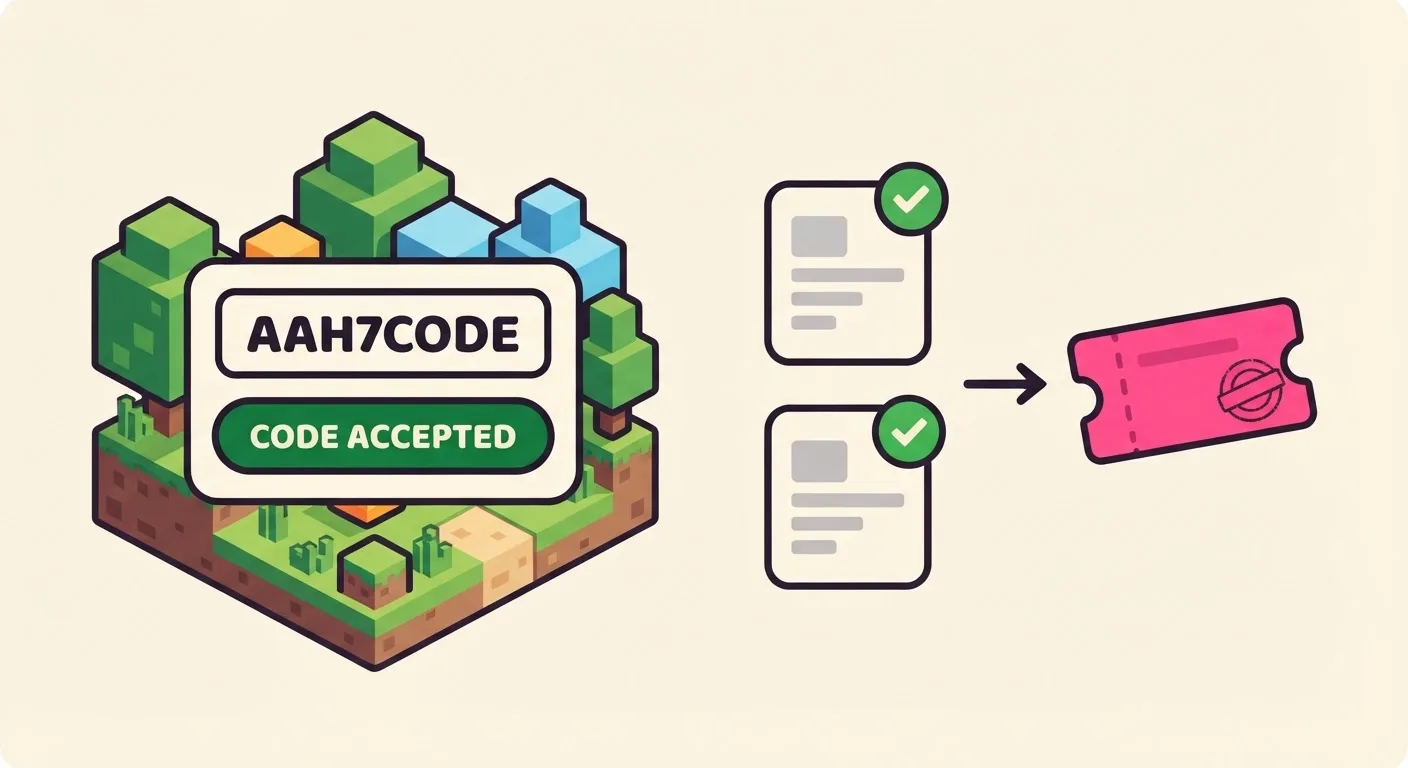
Where codes come from
The primary source for every game is the game's own page on Roblox — developers publish live codes in the experience description, and that text is the closest thing to an official list there is. On top of that we cross-check third-party trackers, but only ones that date their own checks: undated "100% working" lists don't make it into our source list. Every code page links its sources at the bottom so you can check them yourself.
What verification here does and doesn't mean
We'd rather be exact than flattering, so: our checking is documentary, not hands-on. A code is published as active when it appears in the game's own description or in more than one dated source, and it moves to expired when it disappears from them. We do not redeem every code in an account before listing it, and you shouldn't read our stamp as proof that we did. That method catches dead codes quickly and it's fully auditable from the links we show — but it is weaker than a hands-on test, and pretending otherwise would be the exact thing this page exists to avoid.
How often we check
Every game's code list is re-checked on a daily pass. The "last checked"badge on every codes page always shows the real date of that pass — if it says today, we mean today; if the last pass was a few days ago (a quiet week for that game, or a problem on our end), the date says so honestly instead of faking a fresher stamp.
How puzzle answers are verified
The answer comes first and it has to be sourced before anything else happens. Where the puzzle's publisher makes the day's solution available — the New York Times does for Wordle, Connections and Strands — that is what we use, because the setter is the highest authority there is. Everywhere else we require at least two independent published sources to agree, and a puzzle whose sources disagree, or that only one source has covered, is skipped for the day rather than guessed at.
Hints are then written in our own words — vague first, more specific with each one you open — so you control exactly how much help you want. Today's puzzle always lives at one permanent link per puzzle, so you can bookmark it once and it updates every morning instead of moving.
One failure worth naming, because this page is the wrong place to be vague: an answer that is stale looks exactly like an answer that is fresh. So the check runs automatically now — before anything can be published, every answer is compared against our own archive, and an entry that repeats a previous day's solution is rejected as contaminated rather than shipped. Real puzzles don't repeat themselves; a duplicate means a source went stale, not that lightning struck twice.
What "active" and "expired" actually mean
Active means the code was still listed by our sources on the date stamped at the top of the page. Expired means it dropped out of them, or a source we trust marked it dead. Expired codes aren't deleted — they move to a graveyard section on the same page, so you can see exactly what changed instead of wondering whether a code you remember ever existed.
Corrections
Found a code that won't redeem, or an answer that looks wrong? Tell us at hello@aah7.com or through the contact page. Verified reports usually ship as a fix within a day.
Who's behind AAH7
AAH7 is run by a small independent team. The daily pass itself is automated — people set the source rules, choose which games we cover, and fix the pages when a report comes in; software does the fetching and the comparing. We're not affiliated with Roblox Corporation, The New York Times, or any game studio mentioned on this site. See our full editorial policy and independence statement for the rest of the rules we hold ourselves to.
Quick answers
Do you get paid to list a code or a game?
No. Codes are free rewards from the game’s own developers — we don’t charge games to be listed and we don’t accept payment to add or remove a code.
Why does a code sometimes stop working right after you list it?
Developers can deactivate codes at any time, sometimes within hours of releasing them. Our daily pass catches this and moves the code to the expired list — it doesn’t mean we published it carelessly.
Do you redeem every code yourself before publishing it?
No, and we won’t claim otherwise. Verification here is documentary: we read the game’s own Roblox page and cross-check it against dated third-party trackers. That catches a dead code quickly, but it is not the same as redeeming it in an account — if a code fails for you, tell us and we’ll correct the page.
How do you make sure a puzzle answer is actually correct?
Where the puzzle’s own publisher makes the day’s solution available — as the New York Times does for Wordle, Connections and Strands — we take the answer from there, because nobody is a better authority on a puzzle than the people who set it. For the rest we require at least two independent published sources to agree. If neither is available that morning, the puzzle is skipped rather than published on a guess.